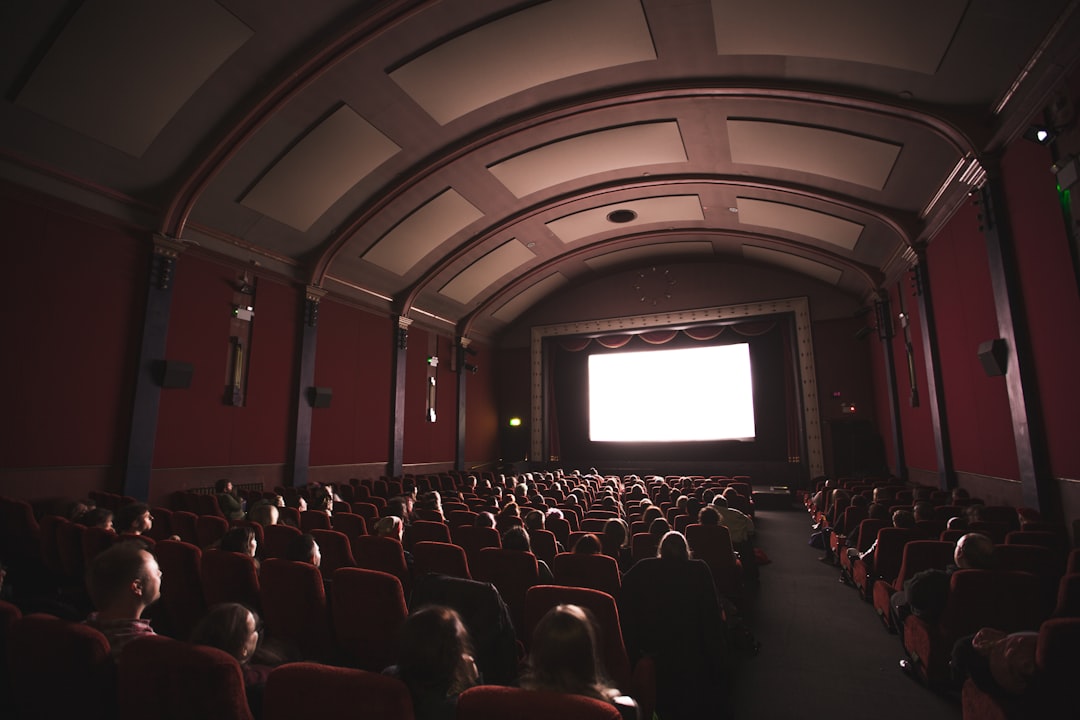
American cinema has always been defined by filmmakers willing to push the image itself as the primary storytelling instrument. From the Steadicam revolution of the 1970s to the digital color-grading era, the country's most celebrated directors treat the camera not as a recording device but as a narrative voice. The 25 films below, spanning 2015 to 2025, each represent a landmark in how stories are told without words alone, through framing, light, movement, and silence. This is not a ranking by box-office gross. It is a curated record of visual ambition.
What ties these films together is a shared philosophy: that every frame is a composition, and every composition makes an argument. Cinematographers like Roger Deakins, Linus Sandgren, and Emmanuel Lubezki, all Oscar winners in this period, have elevated the medium to the level of fine art. Their collaborations with directors like Denis Villeneuve, Damien Chazelle, and Barry Jenkins have produced sequences that critics and film schools now study as reference material for the craft of visual storytelling.
How These Films Were Selected
Selection criteria combined critical consensus (Rotten Tomatoes scores above 85%), awards recognition (Oscar nominations for cinematography, directing, or picture), and measurable influence on subsequent productions as cited by directors in published interviews. Each film introduced at least one technique or approach that independent filmmakers and studio directors actively replicated within two years of its release. Many premiered at independent theater circuits before expanding to wider release.
Films 1-10: Foundation of the Modern Visual Canon
The first group includes films that fundamentally reset audience expectations about what a cinematically ambitious studio or independent production could achieve in the 2010s.
- The Revenant (2015, dir. Alejandro G. Iñárritu) , Shot entirely in natural light by Emmanuel Lubezki, this survival epic starring Leonardo DiCaprio required 9 months of location filming across Canada and Argentina. Lubezki's continuous takes in sub-zero temperatures, using only available light from the golden hour, won him his third consecutive Oscar for Best Cinematography. The famous bear attack scene was shot in a single complex rig movement lasting over four minutes.
- Mad Max: Fury Road (2015, dir. George Miller) , Miller storyboarded nearly all 3,500 shots before a single day of principal photography in Namibia's Namib Desert. Cinematographer John Seale, lured out of retirement, used a "day for night" technique in reverse, shooting in extreme daylight with a special orange-teal color grade in post. The film won 6 Academy Awards, including Best Film Editing, a category rarely won by an action film.
- Moonlight (2016, dir. Barry Jenkins) , Shot by James Laxton using an Arri Alexa camera with anamorphic lenses, the film's signature visual choice was placing the camera at hip-height for scenes involving the young protagonist Chiron, literally showing the adult world from a child's perspective. The circular camera movement during the beach swimming scene was choreographed over two days to capture the exact quality of Floridian Atlantic light.
- La La Land (2016, dir. Damien Chazelle) , Cinematographer Linus Sandgren shot on 35mm film specifically to achieve the soft grain of classic Hollywood musicals. The 6-minute opening freeway dance sequence was filmed over two days with 100 dancers and a camera on a dolly track 300 feet long. The film's seasonal color palette , warm yellows for summer, cool blues for winter , was designed to mirror the emotional arc of the central relationship.
- Dunkirk (2017, dir. Christopher Nolan) , Nolan and cinematographer Hoyte van Hoytema shot primarily on IMAX 65mm film, the first narrative feature to use the format so extensively. With almost no CGI, the aerial dogfight sequences used real Spitfire aircraft with cameras mounted directly on the planes. The film's non-linear triptych structure , land, sea, and air operating on different time scales , was constructed entirely through editing rhythm rather than expository dialogue.
- Blade Runner 2049 (2017, dir. Denis Villeneuve) , Roger Deakins won his first Oscar (after 13 nominations) for this sequel's cinematography. Each environment , the orange dust-shrouded ruins of Las Vegas, the neon-drenched streets of Los Angeles 2049, the grey industrial protein farms , has a completely distinct color palette and lighting philosophy. No single scene uses more than two light sources, creating a shadow-heavy neo-noir that recalls Edward Hopper's paintings in its emotional isolation.
- First Reformed (2017, dir. Paul Schrader) , Schrader used a 1.33:1 aspect ratio (nearly square, like a 1950s television) deliberately to create a sense of confinement and spiritual claustrophobia around Ethan Hawke's troubled pastor. Cinematographer Alexander Dynan shot with a completely static camera throughout , no handheld, no camera movement of any kind , producing an austere, confessional visual language described by critics as "Bressonian."
- Roma (2018, dir. Alfonso Cuarón) , Shot by Cuarón himself on a Sony Venice digital camera, the black-and-white film uses extremely wide shots and slow horizontal pans to observe rather than direct the viewer's attention. The film's climactic ocean sequence, in which Cleo (Yalitza Aparicio) wades into crashing Pacific surf, was filmed over 14 nights with a 65-foot crane and real open-ocean waves. It won Best Cinematography at the Academy Awards, the first time a director had won that award for their own film since Jack Cardiff in 1961.
- If Beale Street Could Talk (2018, dir. Barry Jenkins) , Jenkins and cinematographer James Laxton developed a technique called "the gaze" , direct, sustained eye contact between characters and the camera , to place the viewer inside the emotional intimacy of James Baldwin's Harlem. The warm amber and gold color palette was chosen to honor the visual warmth of 1970s New York photography while also evoking the interior lives of Black American families rarely shown on screen with such tenderness.
- Us (2019, dir. Jordan Peele) , Cinematographer Mike Gioulakis developed a visual grammar based on symmetry and mirroring to reinforce the film's doppelganger theme. Every composition of the Wilson family has a corresponding "shadow composition" for the Tethered family, using inverted lighting (shadows where highlights should be) to create unease. The beach tracking shot that opens the film, following young Adelaide across the sand, required 28 takes to sync the camera movement with the child actor's rhythm.
Films 11-20: The Independent and Prestige Wave
This group straddles independent productions with micro-budgets and prestige studio films, all united by exceptional visual innovation. Several of these began their journeys at Sundance or Telluride before entering mainstream consciousness, and many drove commercial interest in Main Street businesses through film-tourism in their shooting locations.
- 1917 (2019, dir. Sam Mendes) , The film simulates a single continuous take across two hours using a technique pioneered by the film's cinematographer Roger Deakins: careful editing at natural transition points (a moment of darkness, a doorway) disguised to appear seamless. The production built 7 miles of trench systems and pre-lit environments over 6 weeks so the camera could move uninterrupted. Over 50 pre-light rehearsals were conducted for each "segment" before any live-take recording.
- Portrait of a Lady on Fire (2019, dir. Céline Sciamma) , French director Sciamma's period film, set in 1770s Brittany, uses no score except for one late scene involving live folk music. Cinematographer Claire Mathon lit every scene exclusively using candlelight and fireplaces, with digital cameras (Arri Alexa) set to extremely high ISO levels to capture the natural flame flicker. The film won Best Screenplay at Cannes 2019 and was widely cited by cinematography professors as a masterclass in practical-light shooting.
- Promising Young Woman (2020, dir. Emerald Fennell) , Cinematographer Benjamin Kračun used hyper-saturated pastel candy colors , hot pinks, mint greens, lavender , to create a deliberately disorienting contrast between the cheerful visual surface and the film's dark subject matter of sexual violence and institutional complicity. The visual strategy was directly inspired by the aesthetic of 1950s Technicolor melodramas, weaponizing nostalgia to expose its deceptions.
- Nomadland (2020, dir. Chloé Zhao) , Shot by Joshua James Richards on a Canon C300 Mark III , a consumer-grade camera lightweight enough to be operated by one person , the film uses natural, available light almost exclusively. The shooting schedule was built entirely around the "golden hour" (the 30-45 minutes after sunrise and before sunset), meaning no scene was filmed in ordinary daylight. Non-actor participants from the real nomadic community appear alongside Frances McDormand, who won Best Actress.
- The Power of the Dog (2021, dir. Jane Campion) , Shot by Ari Wegner in New Zealand (doubling for 1920s Montana), the film's wide-angle, landscape-dominant compositions deliberately echo the emotional dominance that Phil Burbank (Benedict Cumberbatch) exercises over those around him. Wegner became the second woman ever nominated for Best Cinematography at the Academy Awards, and she and Campion are cited as having shifted the industry's attention toward female directors of photography.
- Dune: Part One (2021, dir. Denis Villeneuve) , Greig Fraser's cinematography for this Frank Herbert adaptation won the Academy Award for Best Cinematography. Fraser designed a visual grammar based on natural shapes , no chrome, no hard right angles , to make the alien world of Arrakis feel organic and real. The IMAX sequences use the full 1.43:1 frame, while non-IMAX scenes use 2.39:1 anamorphic, creating a visual "breathing" between intimate and epic scale that mirrors the protagonist's expanding consciousness.
- The Tragedy of Macbeth (2021, dir. Joel Coen) , Shot in pure black-and-white on the Sony Venice by Bruno Delbonnel, the film uses a strictly square 1.33:1 aspect ratio and constructed sets (not locations) to create an expressionist, Ingmar Bergman-like visual world. Every scene is lit by a single dominant light source , a window, a candle, a fire , creating pools of light surrounded by absolute darkness. Denzel Washington's performance as Macbeth was described by critics as inseparable from Delbonnel's visual architecture.
- Aftersun (2022, dir. Charlotte Wells) , Cinematographer Gregory Oke shot on both digital and Hi8 camcorder video, deliberately mixing formats to blur the boundary between memory and documentation. The film's low-budget origin (shot for approximately £1 million) forced creative constraints that drove its visual innovation: handheld, intimate framing that mirrors the fragmented, unreliable nature of childhood recollection. Paul Mescal received an Oscar nomination for his performance as Calum.
- Everything Everywhere All at Once (2022, dir. Daniel Kwan & Daniel Scheinert) , Cinematographer Larkin Seiple used a single visual grammar that evolves across three distinct "universes" within the film: flat, institutional fluorescent lighting for the mundane IRS storyline; high-contrast neon for the action sequences; and warm, golden naturalism for emotional breakthrough moments. The film won 7 Academy Awards including Best Picture, and is frequently cited by young filmmakers as a democratizing example of visual ambition achievable with limited equipment.
- The Whale (2022, dir. Darren Aronofsky) , Cinematographer Matthew Libatique shot entirely within one apartment set using a 1.33:1 aspect ratio that creates the visual sensation of confinement. Brendan Fraser's Oscar-winning performance as Charlie, a 600-pound man, was deliberately shot with minimal close-ups , instead, Aronofsky keeps the camera at a respectful middle distance, refusing to reduce the character to his condition. The visual approach was praised by disability advocates as a rare example of non-exploitative portraiture in mainstream cinema.
Films 21-25: Defining the Current Frontier
The final five films represent the cutting edge of American visual storytelling as of 2025, each pushing technical and narrative boundaries in ways that will define the next generation of filmmakers. Their influence is already visible in the independent theater circuit, where emerging directors openly cite these works in interviews and festival panel discussions.
- Past Lives (2023, dir. Celine Song) , In her feature debut, Song and cinematographer Shabier Kirchner use extreme depth-of-field lenses to keep two characters simultaneously in sharp focus within a single frame, even when separated by an entire restaurant. This visual metaphor , proximity with unbridgeable distance , runs through every major scene. The final shot, in which Na Young stands in a New York doorway watching her childhood sweetheart's taxi disappear, is a single unbroken 4-minute take that critics have compared to the farewell sequences in Brief Encounter (1945).
- Killers of the Flower Moon (2023, dir. Martin Scorsese) , Cinematographer Rodrigo Prieto shot the Osage Nation period drama on 35mm film using lenses manufactured between 1920 and 1940 , the actual era of the murders depicted. The result is a visual patina that feels authentically archival without being stylistically retro. At 206 minutes, the film uses extremely long, patient takes to mirror the systematic, slow nature of the historical crime against the Osage people, a storytelling approach Prieto described as "allowing evil to be observed in real time."
- The Zone of Interest (2023, dir. Jonathan Glazer) , Shot by Łukasz Żal using a system of 10 hidden cameras placed around constructed sets of a Nazi commandant's house adjacent to Auschwitz, the film never shows the Holocaust directly , only the sounds and light of it crossing the wall. The "surveillance" camera approach, with no conventional cinematography or lighting setups, was designed to implicate the viewer as an observer of normality adjacent to atrocity. It won Best International Film at the Academy Awards and received a Best Picture nomination.
- Oppenheimer (2023, dir. Christopher Nolan) , Hoyte van Hoytema shot the Trinity nuclear test sequence using custom-built IMAX cameras and practical pyrotechnic effects , the largest non-nuclear explosion ever deliberately created for a film production. The visual approach of showing the test without CGI was a deliberate artistic and philosophical choice: to make the audience feel the real physics of destruction. The film grossed \$952 million worldwide and won 7 Oscars including Best Picture and Best Cinematography.
- Nickel Boys (2024, dir. RaMell Ross) , Ross, a visual artist and documentarian best known for his film Hale County This Morning, This Evening, shot the entire film from a first-person point-of-view perspective , the camera literally occupying the eye position of the characters, showing the world as they see it. Based on Colson Whitehead's Pulitzer Prize-winning novel about a Florida reform school in the 1960s, the visual strategy turns the viewer into a participant in the characters' experience of racial violence rather than a detached observer. It received Academy Award nominations for Best Picture and Best Adapted Screenplay, and Ross received the DGA Award for Outstanding Directorial Achievement for a First Feature Film.
Final Thoughts
These 25 films collectively represent a decade of American cinema at its most ambitious and technically inventive. What is striking about surveying them together is the consistency of one underlying principle: the best visual storytelling always serves character and theme, never spectacle for its own sake. Whether Emmanuel Lubezki is shooting DiCaprio in natural Arctic light or RaMell Ross is placing the camera behind the eyes of a Black teenager in 1960s Florida, the visual choice always carries a philosophical argument about how we see and who gets to be seen.
The broader cultural lesson is equally important. Many of these films began as passion projects with small budgets, premiered at independent venues, and only reached mainstream audiences after critical champions elevated their profiles. Supporting your local independent theater is not just a cultural gesture , it is a direct investment in the pipeline that produces the next Moonlight, the next Aftersun, the next Past Lives.
For Filmmakers and Enthusiasts: What to Study
If you want to understand how these films achieve their effects, start with the Academy's published interviews with their cinematographers, available through the ASC (American Society of Cinematographers) website. For each film, pay attention to the aspect ratio chosen and why, the dominant light source in each scene, and how camera movement is used (or deliberately withheld). The directors and DPs of these 25 films have collectively given hundreds of hours of detailed technical interviews , all publicly accessible , that constitute the best free film school available anywhere.
Frequently Asked Questions
Which of these 25 films won the most Academy Awards?
Everything Everywhere All at Once (2022) won 7 Oscars including Best Picture, Best Director, Best Actress (Michelle Yeoh), Best Supporting Actor (Ke Huy Quan), and Best Supporting Actress (Jamie Lee Curtis). Oppenheimer (2023) also won 7 Oscars including Best Picture. Both films are tied for the most awards on this list.
Which cinematographer appears most frequently in this list?
Roger Deakins shot two films on this list: Blade Runner 2049 (2017) and 1917 (2019), winning the Oscar for Best Cinematography for both. Hoyte van Hoytema also shot two entries: Dunkirk (2017) and Oppenheimer (2023). Barry Jenkins and his regular collaborator James Laxton account for two films as well: Moonlight and If Beale Street Could Talk.
Where can I stream these films legally?
Most titles are available across major platforms: Netflix (Roma, Aftersun, The Power of the Dog), Amazon Prime Video (Promising Young Woman, The Zone of Interest), Apple TV+ (Killers of the Flower Moon), HBO Max (The Tragedy of Macbeth, Dune: Part One), Disney+ (Nomadland), and Mubi for more niche titles like First Reformed and Past Lives.
Which film on this list had the smallest budget?
Aftersun (2022) was produced for approximately £1 million (roughly $1.2 million USD), making it the most modestly budgeted film on the list. Past Lives was made for around $12 million. Both demonstrate that visual ambition is primarily a function of creative clarity and cinematographic skill, not production spending.
Are any of these films suitable for family viewing?
Several are appropriate for mature teens and families: La La Land (PG-13), Dune: Part One (PG-13), and Everything Everywhere All at Once (R, for language and surreal violence, but widely screened with older teens). Films like The Zone of Interest, The Revenant, and Us carry mature content warnings and are best suited to adult audiences.